Scrimshaw
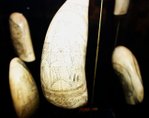
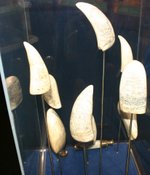
Scrimshaw is the name given to handiwork created by whalers made from the byproducts of harvesting marine mammals. It is most commonly made out of the bones and teeth of Sperm Whales, the baleen of other whales, and the tusks of walruses. more...
It takes the form of elaborate carvings in the form of pictures and lettering on the surface of the bone or tooth, with the engravings highlighted using a pigment, or small sculptures made from the same material. The making of scrimshaw began on whaling ships between 1817 to 1824 on the Pacific Ocean, and survived until the ban on commercial whaling. The practice survives as a hobby and as a trade for commercial artisans. A maker of scrimshaw is known as a scrimshander.
History of scrimshaw
Scrimshaw is derived from the shipboard practice of sailors creating common tools, and on whaling ships the byproducts of whales were readily available. The term originally referred to the making of these tools, only later referring to works of art created by whalers in their spare time. Whale bone is ideally suited towards the task, as it is very easy to work and very plentiful.
The development of scrimshaw took off after the market for whale teeth, which was sought by Chinese traders for use in the Pacific Islands (for example the Fijian market for tabua), was flooded with teeth after a narrative by an American sailor, Captain David Porter, revealed both the market and the source of the teeth. Around this time is the earliest authenticated pictorial piece of scrimshaw (1817). The tooth was inscribed with the following This is the tooth of a sperm whale that was caught near the Galapagos islands by the crew of the ship Adam , and made 100 barrels of oil in the year 1817.
Read more at Wikipedia.org