Benches, Stools
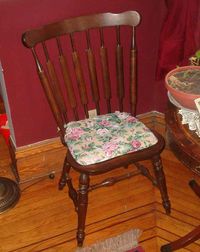
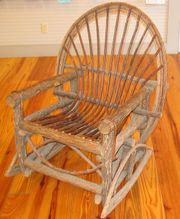
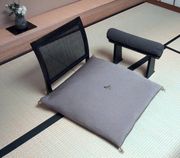
A chair is a piece of furniture for sitting, consisting of a seat, a back, and sometimes arm rests, commonly for use by one person. Chairs also often have legs to support the seat raised above the floor. Without back and arm rests it is called a stool. more...
A chair for more than one person is a couch, sofa, settee, loveseat (two-seater without arm rest in between) or bench. A separate footrest for a chair is known as an ottoman, hassock or poof. A chair mounted in a vehicle or in a theatre is simply called a seat. Chairs as furniture are typically not attached to the floor and so can be moved.
The back often does not extend all the way to the seat to allow for ventilation. Likewise, the back and sometimes the seat are made of porous materials or have holes drilled in them for decoration and ventilation.
The back may extend above the height of the head. There may be separate headrests. Headrests for seats in vehicles are important for preventing whiplash injuries to the neck when the vehicle is involved in a rear-end collision.
History of the Chair
The chair is of extreme antiquity, although for many centuries and indeed for thousands of years it was an article of state and dignity rather than an article of ordinary use. “The chair” is still extensively used as the emblem of authority in the House of Commons and in public meetings. It was not, in fact, until the 16th century that it became common anywhere. The chest, the bench and the stool were until then the ordinary seats of everyday life, and the number of chairs which have survived from an earlier date is exceedingly limited; most of such examples are of ecclesiastical or seigneurial origin. Our knowledge of the chairs of remote antiquity is derived almost entirely from monuments, sculpture and paintings. A few actual examples exist in the British Museum, in the Egyptian museum at Cairo, and elsewhere.
Read more at Wikipedia.org